


Advancements in Bone-Anchored Technologies Redefine the Osseointegration Implants Market
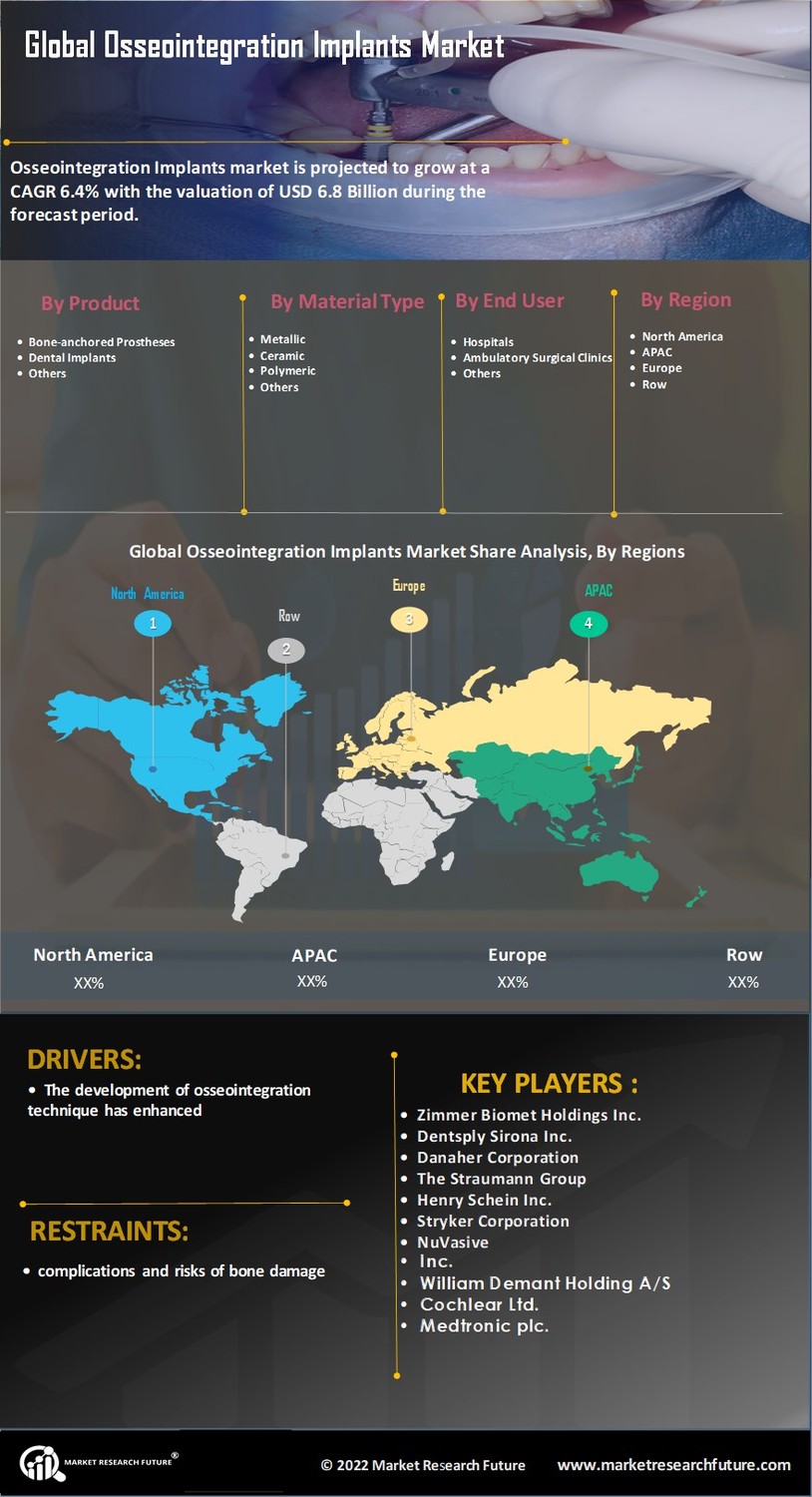
The global healthcare industry is witnessing a notable transformation as bone-anchored implant technologies continue to evolve. Among these innovations, osseointegration implants are gaining increased attention for their ability to restore mobility, stability, and confidence to patients requiring advanced orthopedic and dental solutions. The Osseointegration Implants Market
is emerging as a key segment within the medical device landscape, driven by technological progress and rising patient awareness.
https://www.marketresearchfuture.com/reports/osseointegration-implants-market-6740
Osseointegration refers to the direct structural and functional connection between living bone and the surface of an implant. This approach eliminates the need for traditional socket-based prosthetics, offering patients improved comfort and control. In recent years, hospitals and specialty clinics have reported growing demand for these implants, particularly among amputees and individuals with complex orthopedic conditions.
One of the major developments shaping the market is the advancement of implant materials. Modern osseointegration implants are now manufactured using high-strength titanium alloys and surface-treated coatings that enhance bone bonding and reduce healing time. These material improvements have significantly lowered complication risks, encouraging more surgeons to recommend the procedure as a long-term solution rather than a last resort.
From a regional perspective, healthcare systems in developed economies are actively integrating osseointegration procedures into rehabilitation programs. Improved reimbursement frameworks, combined with growing investments in specialized surgical training, are accelerating adoption rates. At the same time, emerging markets are beginning to explore this technology as healthcare infrastructure improves and awareness of advanced prosthetic options expands.
Another important trend influencing the Osseointegration Implants Market is the integration of digital planning tools. Surgeons now rely on 3D imaging, computer-assisted design, and personalized implant modeling to improve surgical accuracy. These technologies not only enhance patient outcomes but also reduce procedural risks, making osseointegration more accessible to a wider patient population.
Patient preference is also playing a critical role in market growth. Individuals increasingly seek prosthetic solutions that offer greater mobility and a more natural feel. Osseointegration implants address these needs by enabling better load transfer and sensory feedback, often resulting in improved quality of life. As patient success stories gain visibility, confidence in the procedure continues to rise.
Looking ahead, ongoing clinical research and collaboration between medical device manufacturers and healthcare providers are expected to support further innovation. Focus areas include infection-resistant surfaces, faster recovery protocols, and minimally invasive surgical techniques. These developments are likely to strengthen the market’s position within the broader orthopedic and prosthetic sector.
The global healthcare industry is witnessing a notable transformation as bone-anchored implant technologies continue to evolve. Among these innovations, osseointegration implants are gaining increased attention for their ability to restore mobility, stability, and confidence to patients requiring advanced orthopedic and dental solutions. The Osseointegration Implants Market
is emerging as a key segment within the medical device landscape, driven by technological progress and rising patient awareness.
https://www.marketresearchfuture.com/reports/osseointegration-implants-market-6740
Osseointegration refers to the direct structural and functional connection between living bone and the surface of an implant. This approach eliminates the need for traditional socket-based prosthetics, offering patients improved comfort and control. In recent years, hospitals and specialty clinics have reported growing demand for these implants, particularly among amputees and individuals with complex orthopedic conditions.
One of the major developments shaping the market is the advancement of implant materials. Modern osseointegration implants are now manufactured using high-strength titanium alloys and surface-treated coatings that enhance bone bonding and reduce healing time. These material improvements have significantly lowered complication risks, encouraging more surgeons to recommend the procedure as a long-term solution rather than a last resort.
From a regional perspective, healthcare systems in developed economies are actively integrating osseointegration procedures into rehabilitation programs. Improved reimbursement frameworks, combined with growing investments in specialized surgical training, are accelerating adoption rates. At the same time, emerging markets are beginning to explore this technology as healthcare infrastructure improves and awareness of advanced prosthetic options expands.
Another important trend influencing the Osseointegration Implants Market is the integration of digital planning tools. Surgeons now rely on 3D imaging, computer-assisted design, and personalized implant modeling to improve surgical accuracy. These technologies not only enhance patient outcomes but also reduce procedural risks, making osseointegration more accessible to a wider patient population.
Patient preference is also playing a critical role in market growth. Individuals increasingly seek prosthetic solutions that offer greater mobility and a more natural feel. Osseointegration implants address these needs by enabling better load transfer and sensory feedback, often resulting in improved quality of life. As patient success stories gain visibility, confidence in the procedure continues to rise.
Looking ahead, ongoing clinical research and collaboration between medical device manufacturers and healthcare providers are expected to support further innovation. Focus areas include infection-resistant surfaces, faster recovery protocols, and minimally invasive surgical techniques. These developments are likely to strengthen the market’s position within the broader orthopedic and prosthetic sector.
Advancements in Bone-Anchored Technologies Redefine the Osseointegration Implants Market
The global healthcare industry is witnessing a notable transformation as bone-anchored implant technologies continue to evolve. Among these innovations, osseointegration implants are gaining increased attention for their ability to restore mobility, stability, and confidence to patients requiring advanced orthopedic and dental solutions. The Osseointegration Implants Market
is emerging as a key segment within the medical device landscape, driven by technological progress and rising patient awareness.
https://www.marketresearchfuture.com/reports/osseointegration-implants-market-6740
Osseointegration refers to the direct structural and functional connection between living bone and the surface of an implant. This approach eliminates the need for traditional socket-based prosthetics, offering patients improved comfort and control. In recent years, hospitals and specialty clinics have reported growing demand for these implants, particularly among amputees and individuals with complex orthopedic conditions.
One of the major developments shaping the market is the advancement of implant materials. Modern osseointegration implants are now manufactured using high-strength titanium alloys and surface-treated coatings that enhance bone bonding and reduce healing time. These material improvements have significantly lowered complication risks, encouraging more surgeons to recommend the procedure as a long-term solution rather than a last resort.
From a regional perspective, healthcare systems in developed economies are actively integrating osseointegration procedures into rehabilitation programs. Improved reimbursement frameworks, combined with growing investments in specialized surgical training, are accelerating adoption rates. At the same time, emerging markets are beginning to explore this technology as healthcare infrastructure improves and awareness of advanced prosthetic options expands.
Another important trend influencing the Osseointegration Implants Market is the integration of digital planning tools. Surgeons now rely on 3D imaging, computer-assisted design, and personalized implant modeling to improve surgical accuracy. These technologies not only enhance patient outcomes but also reduce procedural risks, making osseointegration more accessible to a wider patient population.
Patient preference is also playing a critical role in market growth. Individuals increasingly seek prosthetic solutions that offer greater mobility and a more natural feel. Osseointegration implants address these needs by enabling better load transfer and sensory feedback, often resulting in improved quality of life. As patient success stories gain visibility, confidence in the procedure continues to rise.
Looking ahead, ongoing clinical research and collaboration between medical device manufacturers and healthcare providers are expected to support further innovation. Focus areas include infection-resistant surfaces, faster recovery protocols, and minimally invasive surgical techniques. These developments are likely to strengthen the market’s position within the broader orthopedic and prosthetic sector.
0 Commentarii
0 Distribuiri
170 Views
0 previzualizare

 English
 Arabic
 French
 Spanish
 Portuguese
 Deutsch
 Turkish
 Dutch
Dutch
 Italiano
 Russian
 Portuguese (Brazil)
 Greek
Greek